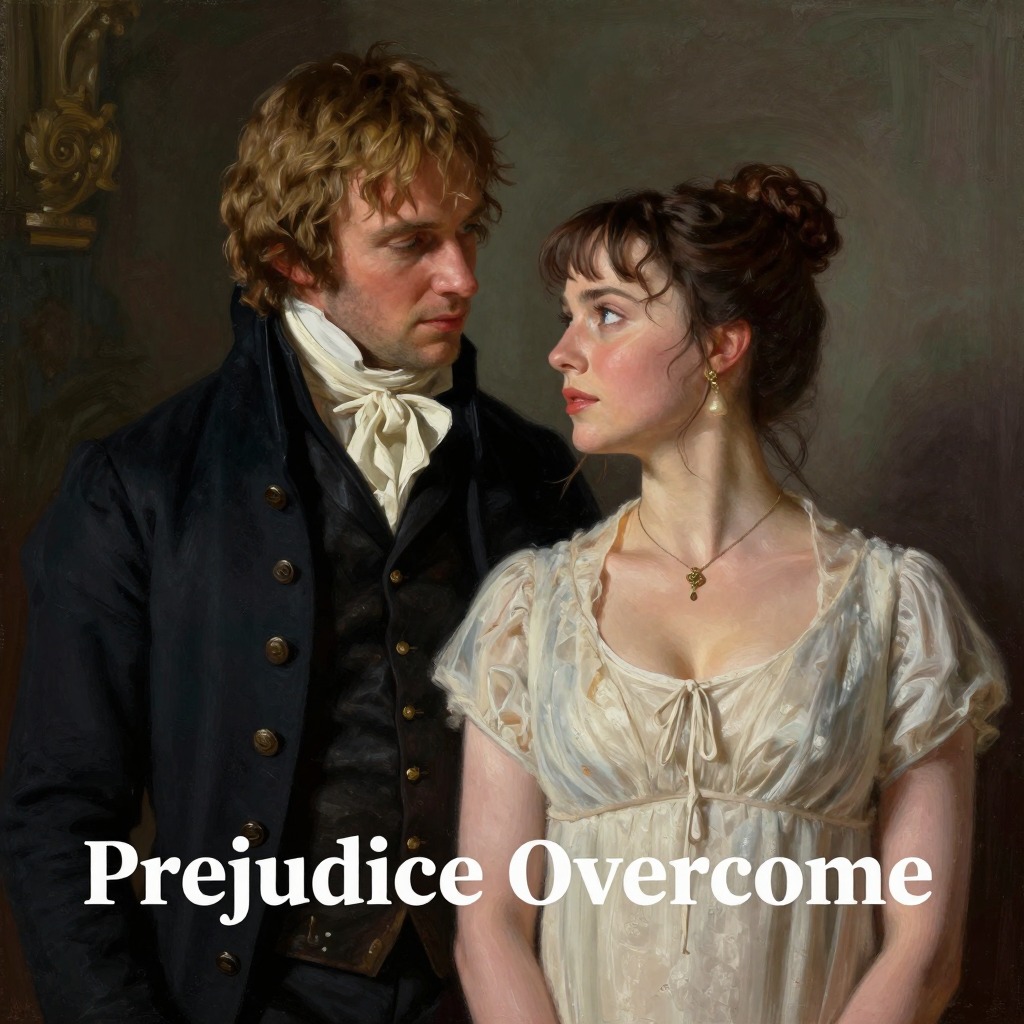
Mrs. Bennet
Mrs. Bennet is the excitable, matchmaking mother of the five Bennet daughters, whose single-minded obsession with marrying them off to wealthy men drives much of the novel's comic conflict and social commentary. Her lack of sense, her incessant scheming, and her utter disregard for propriety repeatedly embarrass her family and nearly ruin her eldest daughter's chance at happiness, yet she is also a product of the precarious economic situation that makes her frantic efforts, however foolish, a matter of genuine survival for her daughters.
Identity and Background
Mrs. Bennet is a woman of "mean understanding, little information, and uncertain temper," whose mind is less difficult to develop than her husband's. The business of her life is to get her daughters married; its solace is visiting and news. Her father was an attorney in Meryton, and she brought a dowry of four thousand pounds to her marriage. She has a sister married to Mr. Phillips, who succeeded their father in his business, and a brother, Edward Gardiner, who is settled in London in a respectable line of trade. These connections—a country attorney and a tradesman in Cheapside—are precisely the kind of "low connections" that the snobbish Miss Bingley and Mr. Darcy later hold against the Bennet family. Mrs. Bennet herself is entirely without self-awareness about her own vulgarity; she boasts of her brother's situation without understanding how it is perceived by the fashionable world. Her marriage to Mr. Bennet was founded on his youthful captivation by her youth and beauty, but her weak understanding and illiberal mind very early put an end to all real affection on his part. He finds his principal amusement in her ignorance and folly, treating her with a sarcastic humor she never fully comprehends.
Life and Plot Trajectory
Mrs. Bennet's entire trajectory through the novel is defined by her reactions to the romantic prospects of her daughters. The arrival of Charles Bingley, a single man of large fortune, at Netherfield Park throws her into a fever of excitement. She immediately schemes to throw Jane and Bingley together, famously sending Jane on horseback to Netherfield in the rain so that she will be forced to stay overnight and nurse a cold. When Jane becomes ill, Mrs. Bennet is delighted rather than concerned, seeing it as a perfect opportunity to secure her daughter's place in the house. She visits Netherfield and embarrasses Elizabeth and Jane by her loud, tactless conversation, boasting about Jane's beauty and complaining about the entail of Longbourn. At the Netherfield ball, she talks openly and audibly about her expectation that Jane will soon marry Bingley, a display overheard by Mr. Darcy that confirms his worst objections to the family. When Bingley abruptly leaves Netherfield and does not return, Mrs. Bennet refuses to accept the reality, continuing to insist he will come back and blaming everyone but herself for the disappointment. Her next great project is Mr. Collins, the heir to Longbourn, who comes seeking a wife. She is initially furious at the idea of the entail, but when Mr. Collins proposes to Elizabeth, she is overjoyed and insists that Elizabeth accept him. Elizabeth's refusal throws Mrs. Bennet into a rage; she calls Elizabeth a "headstrong, foolish girl" and threatens never to speak to her again. When Mr. Collins instead becomes engaged to Charlotte Lucas, Mrs. Bennet is devastated, complaining bitterly that the Lucases are "very artful people" and that she has been "barbarously misused." She refuses to speak to Sir William or Lady Lucas for months. The elopement of Lydia with George Wickham is the most severe crisis for Mrs. Bennet. She takes to her bed, convinced that Mr. Bennet will be killed in a duel with Wickham, and that the Collinses will turn them all out of Longbourn. Her recovery is instantaneous when she learns that Lydia is to be married; she immediately begins planning the wedding clothes and boasting of her daughter's good fortune, entirely without shame or reflection on the disgrace of the elopement. Her final triumph comes with Jane's engagement to Bingley and, even more spectacularly, Elizabeth's engagement to Darcy. Upon hearing of the latter, she is thrown into transports of joy, exclaiming over Darcy's ten thousand a year and declaring that Jane's match is "nothing to it."
Key Actions and Objectives
Mrs. Bennet's primary objective is the marriage of her daughters, which she pursues with relentless energy and a complete absence of discretion. She manipulates situations to throw her daughters into the company of eligible men, as when she forces Jane to ride to Netherfield in the rain. She openly solicits invitations and pushes for visits, as when she presses Bingley to dine at Longbourn and later insists that Mr. Bennet must wait on him upon his return. She is the driving force behind the family's social engagements, always calculating how they might lead to a match. Her actions are consistently governed by a short-sighted pragmatism: she values Mr. Collins as a husband for Elizabeth because he will inherit Longbourn, and she is initially hostile to Darcy because of his pride, only to reverse her opinion completely when she learns of his wealth. She is utterly incapable of understanding the social consequences of her own behavior. Her loud, boastful conversation at the Netherfield ball, in which she enumerates the advantages of Jane's expected marriage to Bingley, is overheard by Darcy and contributes directly to his decision to separate his friend from Jane. She never grasps that her own vulgarity is a primary obstacle to her daughters' advancement.
Relationships and Conflict
Mrs. Bennet's relationship with her husband is one of fundamental incompatibility. Mr. Bennet treats her with a mixture of contempt and amusement, deliberately provoking her and then retreating to his library to escape her raptures or complaints. He refuses to support her schemes, as when he declines to force Elizabeth to marry Mr. Collins, telling his wife, "Your mother will never see you again if you do not marry Mr. Collins, and I will never see you again if you do." She, in turn, never understands his character, even after three-and-twenty years of marriage. With her daughters, her favoritism is blatant. Lydia is her undisputed favorite, indulged and brought into public at an early age, and Mrs. Bennet defends her silliness and her obsession with officers. Elizabeth is the least dear to her, and she is openly critical of Elizabeth's refusal of Mr. Collins. Jane is valued for her beauty, which Mrs. Bennet sees as her primary asset in the marriage market. She is in constant conflict with Elizabeth, who tries to check her mother's imprudence, and with Jane, who quietly endures her mother's relentless commentary on Bingley. Her relationship with her brother, Mr. Gardiner, and his wife is more respectful, as she looks to them for assistance in times of crisis, but even then, her gratitude is shallow and quickly forgotten in her excitement over new prospects.
Change and Ending
Mrs. Bennet undergoes no genuine moral or intellectual change. The novel's conclusion finds her as silly and self-absorbed as at its beginning. The successful marriages of her three eldest daughters—Jane to Bingley, Elizabeth to Darcy, and Lydia to Wickham—fulfill her every wish, and she is left in a state of perpetual satisfaction. She visits Mrs. Bingley and talks of Mrs. Darcy with delighted pride. The narrator notes that it might be hoped that the accomplishment of her earnest desire would make her "a sensible, amiable, well-informed woman for the rest of her life," but immediately adds that she still is "occasionally nervous and invariably silly." Her husband, who might not have relished domestic felicity in a more sensible form, is perhaps lucky that she remains unchanged. She never reflects on the danger Lydia's elopement posed to the family's reputation, nor does she acknowledge the role her own indulgence played in it. She simply enjoys the triumph of having three daughters married, and her final state is one of unearned, unreflective contentment.
Thematic Significance
Mrs. Bennet embodies the novel's critique of a society in which marriage is primarily an economic transaction and a woman's only path to security. Her frantic, undignified pursuit of husbands for her daughters is a direct consequence of the entail that will leave them homeless upon Mr. Bennet's death. She is a grotesque exaggeration of the very real pressures faced by women of her class. Her lack of sense and propriety, however, also serves as a foil to the more rational and principled behavior of Elizabeth and Jane. She represents the worst possible outcome of a system that values women only for their marriageability: a woman who has internalized that value so completely that she has no other identity. Her vulgarity is a constant source of shame for Elizabeth, and it is one of the primary obstacles that Darcy must overcome in his own pride before he can accept Elizabeth. In the end, Mrs. Bennet is both a comic figure and a cautionary one, illustrating the dangers of a life lived entirely through the pursuit of social and economic advancement, without any inner resources of sense or character.